top of page
SWG
Susanna W. Gold, Ph.D.
Curator • Art Advisor • Art Historian
An evening of
Art in Provence
with
Jill Steenhuis & Sergio Ruffato

Jill Steenhuis
"Wisteria Petals in the Wind" (detail) oil on canvas, 30" x 40"

Sergio Ruffato
"Folium" brass with patina, 20" x 7" x 6"
Thurs, October 15
5:00-8:00pm
Wine and Hors d'oeuvres Reception
with artists' remarks at 6:00pm
Fri, Oct 16 & Sat, Oct 17
12:00-6:00pm
Open House - come by anytime!
The Gallery at Folly Farm
837 Half Mile Branch Road
Crozet, VA
Directly across from the main entrance to King Family Vineyards

Jill Steenhuis
An Atlanta native and Sweet Briar College '80 graduate, Jill Steenhuis has lived and painted in Aix-en-Provence for over 40 years. Her work is held in museum and private collections across the United States. In 2006, she was selected by the Smithsonian Institution as its Cézanne specialist for
the artist’s centennial and has appeared on Good Morning America.
Sergio Ruffato
Born and raised in Aix-en-Provence, Sergio Ruffato graduated from the Savannah College of Art and Design ’12 with a BFA in Sculpture. His metal sculptures have been exhibited at prestigious art fairs in Paris and Lyon, with public installations in Marseille and Huntsville, confirming his path as an art ambassador between France and America.
Jill & Sergio are honored to be the Featured Artists at the Huntsville Museum of Art Gala, March 2–6, 2027.
The Gallery at Folly Farm
is a non-traditional, in-home farmhouse art exhibition space open by chance, appointment, and special events:

Kirby Frendendall, The Generosity of Light, 2023. oil on acid washed tin, 10" x 8" framed to 17" x 15", $975
Additional work will be on view throughout the farmhouse by:
Lavett Ballard
Keith Breitfeller
Susan Willis Brodie
Paula Cahill
Brian David Dennis
John Dowell
VM Fisk
Kirby Frendendall
Tom Judd
Joseph McAleer
Rachel Romano
Mat Tomezsko
&
Jay Walker
.jpg)
Rachel Romano, Keeper of the Red Thread. Oil on linen, 27" x 22", $3,900
Meanwhile, on view at our Philadelphia location...
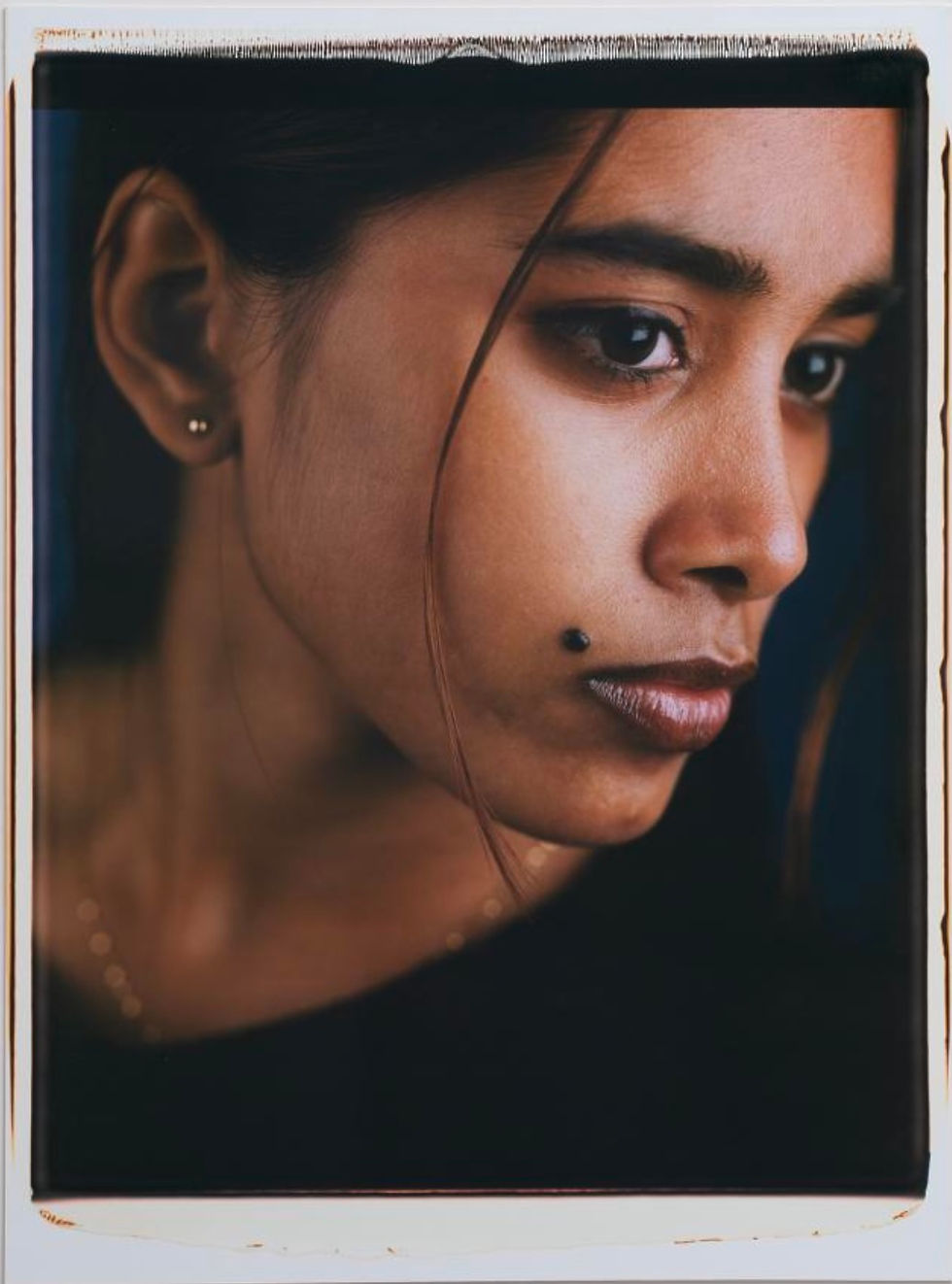

1/1
Dawoud Bey (b. 1953), Double Portrait, ca. 1990s
Polacolor ER photograph, 29.25” x 22” each
(price on request)
Dawoud Bey is interested in the portrait as a site of psychological and emotional engagement between the photographer and his model. The multiple panels of Bey's signature style, evident in this ca. 1990s Polaroid Polacolor diptych, allow him to capture momentary changes in expression, fleeting gestures, and the subtle articulations of personality.
In the 1990s, Bey went “from the streets into the studio,” taking on a 20-inch-by-24-inch color Polaroid format, to produce large, lush photos against a dark background, a practice Bey borrowed from Rembrandt to confer a sense of nobility upon his own subjects. In later large-format Polaroid portraits, frames divide Bey’s subjects by threes and even fours, revealing multifaceted selves and interrelationships, or isolate details. Bey’s doubled images and fragmented frames reveal a layered complexity to his black and brown subjects, diverging from the one-dimensional images of black people that historically preceded them. The portraits and isolated details also remind us that photography, since its inception, was used as a means of cataloging (black and brown) humans, of scrutinizing, of phrenology.
Bey earned a BA from Empire State College and MFA from Yale University, where he was one of the first Black students to attend the photography program. He is the recipient of numerous awards, including a MacArthur Fellowship (2017) and the International Center of Photography Infinity Award (2019). Bey is Professor of photography at Columbia College Chicago.
His work can be found in the permanent collections of the National Gallery of Art, Washington, D.C., San Francisco Museum of Modern Art (SFMOMA); Art Institute of Chicago; Guggenheim Museum; Metropolitan Museum of Art; Whitney Museum of American Art; The Jewish Museum; Museum of Modern Art; Studio Museum in Harlem; Museum of Contemporary Photography; Museum of Contemporary Art, Chicago; Bibliothèque Nationale, Paris; Schomburg Center for Research in Black Culture; Petrucci Family Foundation Collection of African American Art, and many other institutions.
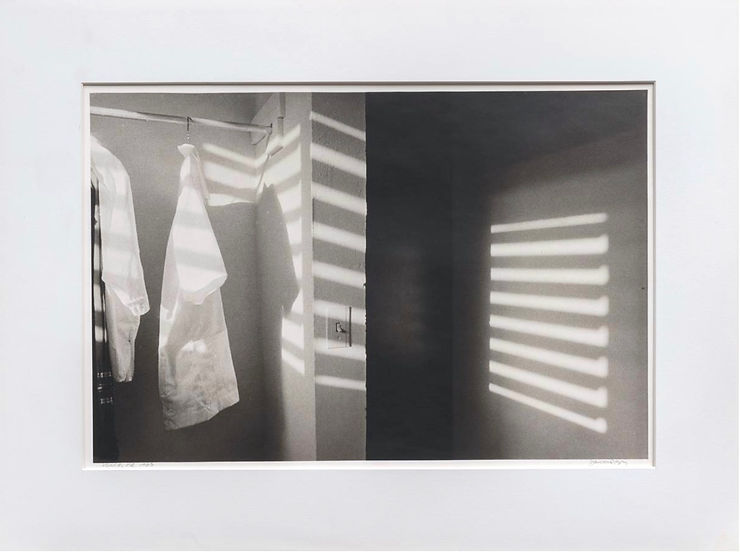
Dawoud Bey (b. 1953), In the Bedroom, Ponce, Puerto Rico, 1983
Silver print, 16” x 20” matted to 18” x 24”
(price on request)
Bey’s early black-and-white work included studies in Puerto Rico (ca. mid 1980s), focus on the close observation of everyday life and "moments of ordinary feeling". His Puerto Rico work fits within Bey's broader commitment to exploring and representing Black and Caribbean communities and their personal lives. This work is characterized by a "humanist realism," focusing on the emotional lives and dignity of underrepresented people. Bey has noted that his travels to Puerto Rico and Mexico were influential in shifting his style away from the spontaneous street photography toward portraits where subjects are more present in the image-making process. Bey’s connection to the island is also personal; he has cited his courtship with his former wife, the painter Candida Alvarez (who is of Puerto Rican descent), as a significant part of his life during the time he was developing this body of work.
Selections from Bey’s Puerto Rico series have been collected by the High Museum of Art, Atlanta, GA and the Museum of Contemporary Photography, Chicago, IL, and were featured in the early solo exhibition, Puerto Rico: A Chronicle (1983) at Hunter College's Center for Puerto Rican Studies.
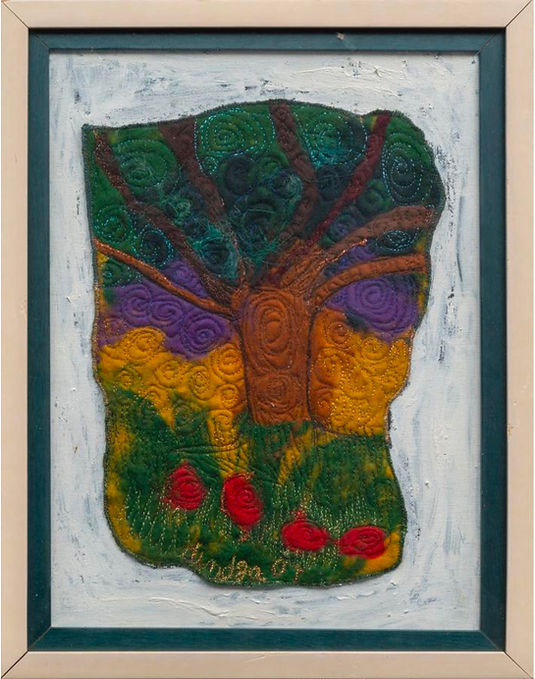
Dindga McCannon (b. 1947), Untitled, 2007
handmade felt mounted on painted board
15 ½” x 11 ½” framed to 18” x 14 ¼”
On view at Fridman Galleries, NYC in
Dindga McCannon: Yesterday and Today
September 9 – October 14, 2026
Dindga McCannon, who spent most of her 50+ year career in Harlem and is now living and working in Philadelphia, is a pioneer of 20th- and 21st-century fiber art. Her vibrant textile assemblages and found-object quilts straddle the spheres of domestic life and fine art, and reclaim needlework -- a skill passed down to her through female family members -- as a form of feminist activism.
Working from lived experiences, McCannon often focuses on narrative and figural representation, communicating ideas about Black women and Black communities in her multi-disciplinary practice, which often blends painting, dyeing techniques, printmaking, and mixed media assemblage with non-traditional materials such as personal photographs and day to day ephemera.
Though McCannon had been working with textiles since the 1950s, she began her fine art career in the ‘60s studying under Jacob Lawrence, Charles Alston, Richard Mayhew, and Al Hollingsworth at the Art Students League of New York, as well as at the Robert Blackburn Printmaking Workshop. She was a member of the Weusi Artist Collective in Harlem, a group of African American artists that supported art exploration and professional development of Black artists, and co-founded Where We At, a collective of Black Women Artists in New York with Faith Ringgold and Kay Brown. By creating a support system for making art, fostering community, and advocating for each other toward visibility and inclusion, Where We At recognized the power of collectivity to empower black women. These experiences built a lasting foundation for McCannon’s groundbreaking work rooted in shared personal experiences with family, friends, and heroines.
McCannon’s work is in the permanent collections of the National Gallery of Art, Whitney Museum of American Art, Hirshhorn Museum, Brooklyn Museum, Studio Museum in Harlem, Phillips Collection, Brooklyn Museum, Schomburg Center for Research in Black Culture, among others. She has been recognized for distinction by the Harlem Arts Alliance and the New York Foundation for the Arts, has received two grants through the Northern Manhattan Arts Alliance’s Small Grants for Individual Artists program. Recent exhibitions featuring her work include Afro-Atlantic Histories at the National Gallery of Art; Pour Tear Carve at the Phillips Collection; Pablo-Matic at the Brooklyn Museum; We Wanted a Revolution: Black Radical Women, 1965-1985 at the Brooklyn Museum and the California African American Museum; Black Power at the National Civil Rights Museum, Memphis, TN, and Fridman Gallery, New York, NY.
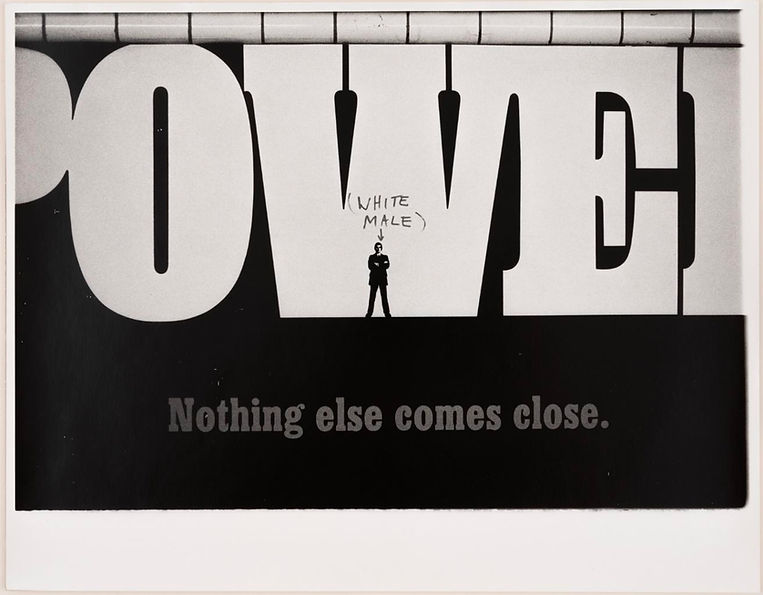
Beuford Smith (1936-2025), Power (White Male)
Gelatin silver print, 11" x 14"
(price on request)

Beuford Smith (1936-2025), Red Cap, Port Authority, 1972
Gelatin silver print, 14" x 11"
(price on request)
New York based photographer Beuford Smith, becoming active in the Civil Rights era of the late 1960s and ‘70s, is best known for his socially conscious photographs of Black communities, significant events, and political and cultural leaders at work. Smith’s evocative black and white photos, often verging on abstraction, reveal his empathy for his subjects, and arouse strong emotional responses from his viewers.
Inspired by Roy DeCarava’s intimate approach to photographing the Black community in Harlem, Smith joined DeCarava as a member of the Harlem-based Kamoinge Workshop, a collective of mutually supportive Black photographers, which also included Anthony Barboza, Louis Draper, Ming Smith, Adger Cowans, Daniel Dawson, and others. He later became the founding editor of the Black Photographers Annual, an anthology published throughout the 1970s, and started the Cesaire Photo Agency. He has taught photography workshops and at Cooper Union, New Muse, Brooklyn Museum, PAL, and Hunter College, and his work has appeared in publications including Camera, Candid Photography, Photo District News, Soul of a Nation, The Sweet Breath of Life, Contact Sheet, Harpers, Collecting African American Art, and MoMA publications. His photographs have been exhibited at the Studio Museum in Harlem, Brooklyn Museum, Crystal Bridges Museum of American Art, The Broad in Los Angeles, de Young Museum in San Francisco, Museum of Fine Arts, Houston, Tate Modern in London, Addison Gallery of Art, New York University, Tate Modern, and others. His work can be found in the permanent collections of the Museum of Modern Art, Whitney Museum of American Art, the National Gallery of Art, J. Paul Getty Museum, Virginia Museum of Fine Arts, New York Public Library, Princeton University, Haverford College, Cleveland Museum of Art, Carnegie Museum of Art, Baltimore Museum of Art, National Gallery of Art, Detroit Institute of Arts, Museum of Fine Arts, Boston, and others.
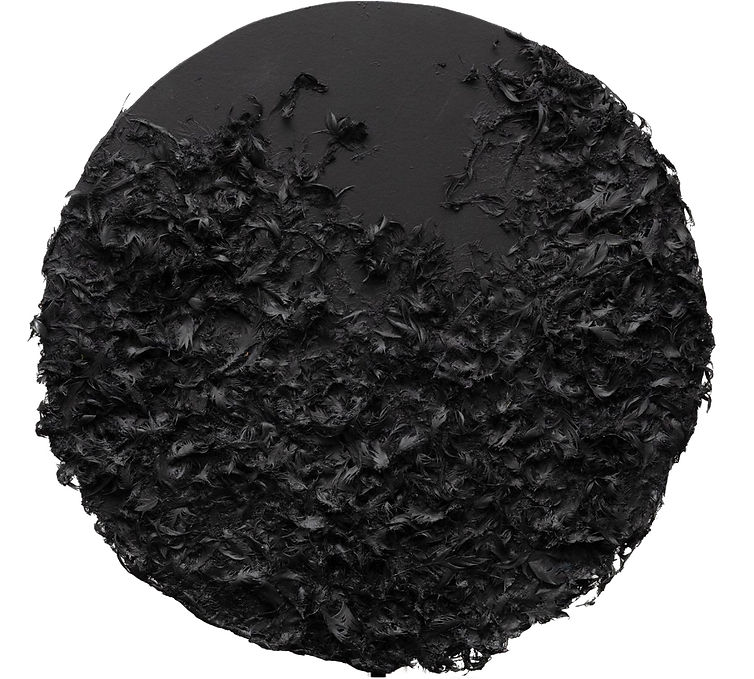
Gregory Coates (b. 1961), Tabasco Series, 2018
acrylic and goose feathers on panel, 24” diam.
(price on request)
Gregory Coates is an established artist and educator working in painting, drawing, sculpture, assemblage, and installation. Incorporating unconventional materials such as feathers, textiles, rubber tubes, and scrub brushes, Coates not only explores the nature of these materials and their textural possibilities, but also provides a subtle undercurrent of social implication. Manual labor, love, grief, and racial identity are quietly evoked in compositions that might at first appear as pure, minimalist abstraction, but emerge nonetheless from lived experience.
“I am not a story teller, but I feel the work I make tells ‘the story’ on its own. I have always had a conversation or narrative about humanity in my work, something I call ‘Social Abstraction.’ Bicycle inner tubes hanging off the ceiling reaching to the floor but not holding anything; feathers which are elusive and light yet adhesive on the picture plane; plastic wrap which is translucent yet solid. My work always includes a kind of contradiction, a way to look at it in several ways. The story told: take a closer look, don’t judge, don’t assume. Be individual, be what you want or what you can be. All of this is social commentary – I just prefer to be questioning rather than explaining.”
Coates studied at the Skowhegan School of Painting & Sculpture and the Corcoran School of Art, and has been teaching for many years at the School of Visual Arts in New York. He has held multiple artist residencies in Japan, South Africa, Berlin, and London. He has been the recipient of numerous prestigious awards, including the Joan Mitchell Foundation Fellowship Grant; Pollock-Krasner Foundation Grant; Adolph and Esther Gottlieb Foundation Grant; Edward Mitchell Bannister Society’s Award for Excellence in Art; New York Foundation for the Arts Fellowship; and an Arts Ovation Award from the Allentown Arts Commission. He regularly exhibits in solo and group exhibitions around the globe, and his work is held in a number of significant private and public collections, including:
- Smithsonian Institute of American Art
- National Museum of African American History and Culture
- Studio Museum in Harlem
- Pennsylvania Academy of Fine Arts
- Virginia Museum of Fine Arts
- Georgia Museum of Art
- 3-D Foundation Sculpture Park (Verbier, Switzerland)
- Paul Pozzoza Museum (Düsseldorf, Germany)
- City of Düsseldorf, Germany
- Pennsylvania Convention Center
- Microsoft, Inc.
- Phillip Morris Corporation
- Coca Cola Bottling Company
- Bank of Delaware
- Beneficial Corporation
- City of Obama, Japan

bottom of page